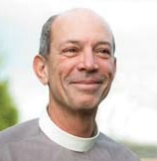
I am trying to answer Jesus’ question: “What are you looking for?”
Last summer, I visited Robben Island just off the shore of Cape Town, South Africa. During the tour of the facility, a former prisoner gave a talk. As he was closing his remarks and heading out the door, a visitor asked how he felt about the election of Barak Obama as president of the United States, and how Mr. Obama’s election effected the situation of non-whites all over the globe.
Up until this point, the man’s remarks had been non-political, facts and stories about the life of a prisoner at Robben Island during the Apartheid regime. Certainly his life and the life of his comrades was harsh, unfair and dehumanizing. His tone, however, was cordial and even positive. It seemed that he understood that the treatment he received at the hands of his captors was, in a twisted way, rational given the code that they were asked to enforce. He did not blame them even though he had cause. I could tell that he was annoyed by the question. Nevertheless, he paused, turned to face us, and then he said this: “Barak Obama lives within a framework. The foreign policies of the US do not change. He lives within that framework.”
This former prisoner is an intelligent person of faith. Forced to live in isolation for years, as he and Nelson Mandela and thousands of others were, he had come to a clear understanding of what it means to live within a framework, and he wanted us to know that each person is challenged by his or her chosen framework.
Jesus was such a person. If you look deeply into his teachings, you will see his compassion and concern for those in leadership positions. He cared deeply about the poor and the disenfranchised, but he also cared about leaders whose frameworks were narrow, self-serving, strict or closed-minded.
The framework of the Jewish leadership in Jesus’ time had grown narrow. Codes and rituals dictated what people could eat and drink, whom they could associate with or marry, who was in or who was out.
Jesus came to liberate humanity from the narrow a framework. He as much as said: the kingdom of heaven is a place that has no framework but one: love—love thyself; love thy neighbor; and love God.
If you are reading this, you know that you, also, live within a framework. I happen to be a teacher in an Episcopal school. Here when students and teachers sign our annual contracts, we are dedicating ourselves to the pursuit of justice, peace and respect for every human being and the natural world. This is the stated mission of my school, and it is a good and decent framework. But we must consider that schools are institutions where frameworks and dimensions can become narrow places where students are taught to move ahead in selfish ways, competing with each other for better SAT scores, outstanding GPA, higher social status, and longer lists of community service activities.
Many schools include an outreach component because they know that giving time and money to those who are less fortunate than ourselves creates a sense of duty and purpose that builds character. This is known as service learning. Some schools include a third component, one that acknowledges the mystery of life and encourages an infinite search for who we are and why we are here. These schools talk about being transformational, but the truth is: a place cannot be transformational. Transformation cannot be sprayed on like paint, measured with standardized tests, or rewarded by a title or diploma. Transformation comes from within. It is something that happens when we decide that we want make a difference.
If experience has taught me anything, it is that the things that save us as individuals, the things that guide us as communities of hope, the things that will ultimately make this world a world of justice, peace and respect for all, are not found in a one or two dimensional framework of policies and rules. What will save us is our vision and our willingness to acknowledge our responsibility to discover who we are.
The one sure way to find out who we are is to help another person find out who they are. External frameworks cannot do it for us. I believe that finding our vocation comes from the Holy Spirit stirring within us, awakening in us a love of others and of God. The former prisoner on Robben Island knew this. Jesus knew this. Suppressed by unfair political and social systems, imprisoned by frameworks of power and prejudice, they discovered that the human spirit can never be taken away.
There is a wonderful song that we sing in chapel services from time to time. It has a line that goes: “If you follow in love, you’ll learn the mystery of, of what you were meant to do and be.”
“What are you looking for?” asks Jesus.
The answer is easy: I am looking for the meaning of my life and the direction I should take to find it. Jesus said, “For whoever would save his life will lose it, and whoever loses his life for my sake will find it.” The question is: Are we too attached to life as we know it to follow Jesus to something new? In other words, are we concerned and anxious about what we will lose or what we will find?
Saturday, February 12, 2011


Tuesday, December 21, 2010
A Cooperative Cummunity Project in Middletown, DE
Dear Friends,
I write as a volunteer with Family Help, Inc. For a number of years, concerned folks in Middletown, Delaware have had a dream of creating transitional housing for families in crisis—families with little kids, but no homes, no jobs, and, in some cases, not enough education or the skills to navigate a way forward.
That dream became a reality last summer. My friends Harvey Zendt, Irv Brockson, Dennis Christy, Jerry Gawel, The Rev. Joann Barker, Brenda Murray, Sam Tuttle, Willie Savage, Father Bob Snable, Lisa LaMarch, Dr. Zelda Carter and others created four family apartments. These tireless volunteers worked with the town, purchased property, rebuilt foundations, renovated, painted, landscaped, etc., etc., then interviewed homeless moms, inviting four families to pilot the program. It has been a very rewarding experience for everyone.
Since August, these families have been receiving food and clothing from generous community groups, financial counseling and job training from board volunteers, and personal counseling from two Middletown pastors. The families are asked to put a small sum of money each month into an account that will help them get started when they have jobs and are ready to move into their own apartments or houses. We are teaching each family to save, to provide for themselves, and to find their way to economic independence and spiritual growth.
Until then, however, help is needed to keep the project going. We need money to maintain the property and provide basic needs for the families. Our goal is to guide these humble folks to a road of self-sufficiency, and when one family leaves to take in the next struggling family.
Won't you please help?
These are hard times, but, together, we can provide hope for struggling families in this small town and point them in a positive direction—towards productive employment and a secure home for their children.
You can help by sending a donation to Family Help, Inc. P.O. Box 302, Middletown, DE 19709. Your donation is tax deductible.
For more information, you may call Harvey Zendt (302-376-6339), or me (302-824-6272).
Peace and Blessings in the new year, and thank you.
Dave D.
I write as a volunteer with Family Help, Inc. For a number of years, concerned folks in Middletown, Delaware have had a dream of creating transitional housing for families in crisis—families with little kids, but no homes, no jobs, and, in some cases, not enough education or the skills to navigate a way forward.
That dream became a reality last summer. My friends Harvey Zendt, Irv Brockson, Dennis Christy, Jerry Gawel, The Rev. Joann Barker, Brenda Murray, Sam Tuttle, Willie Savage, Father Bob Snable, Lisa LaMarch, Dr. Zelda Carter and others created four family apartments. These tireless volunteers worked with the town, purchased property, rebuilt foundations, renovated, painted, landscaped, etc., etc., then interviewed homeless moms, inviting four families to pilot the program. It has been a very rewarding experience for everyone.
Since August, these families have been receiving food and clothing from generous community groups, financial counseling and job training from board volunteers, and personal counseling from two Middletown pastors. The families are asked to put a small sum of money each month into an account that will help them get started when they have jobs and are ready to move into their own apartments or houses. We are teaching each family to save, to provide for themselves, and to find their way to economic independence and spiritual growth.
Until then, however, help is needed to keep the project going. We need money to maintain the property and provide basic needs for the families. Our goal is to guide these humble folks to a road of self-sufficiency, and when one family leaves to take in the next struggling family.
Won't you please help?
These are hard times, but, together, we can provide hope for struggling families in this small town and point them in a positive direction—towards productive employment and a secure home for their children.
You can help by sending a donation to Family Help, Inc. P.O. Box 302, Middletown, DE 19709. Your donation is tax deductible.
For more information, you may call Harvey Zendt (302-376-6339), or me (302-824-6272).
Peace and Blessings in the new year, and thank you.
Dave D.
Faith—Answering The Call
Texts: Isaiah 7:10-16 , Psalm 80:1-7, 17-19, Romans 1:1-7, Matthew 1:18-25
It was probably another ordinary day for Joseph. This pious Jew, whose work was carpentry in Nazareth, looked at his life and was well pleased. After all, he was from good stock, a member of the house of David, a respected family line. He was linked, we do not know for sure how, to a young woman named Mary and was going to marry her.
Joseph was happily minding his own business, when he got some disturbing news. Mary, his betrothed, was with child. Understandably, Joseph’s ordinary day changed. Since then, nothing has been the same.
I am not a carpenter, but I have done some building of things out of wood. It is ordinary work. By that I mean there are steps. The wood must be cut, then stripped of bark, sawed, dried, planed, measured for fit. If a person is alone in his wood shop, he has lots of time to think, to ponder, to dwell on what has gone right or wrong that day. So it was with Joseph on the day he learned that his betrothed was going to have a baby—not his baby. We imagine his confusion, his utter frustration. He feels ill equipped to move forward with his life.
So, he planes the boards. Long after they were level enough, he planes—stroking out his frustration, as needless layers of healthy shavings fall to the ground. This ordinary carpenter, someone whose life is upright and admirable, finds himself at a loss. His orderly plans have been disturbed. What should he do?
Matthew tells us that he “planned to dismiss [Mary] quietly.” It was the lawful thing.
But Matthew also tells us that Joseph had a dream, a dream that changed his mind. The theologian Paul Tillich would say that Joseph was grasped by something, or someone, beyond himself. What he prayed for, and the one to whom he prayed, became one, and he awoke full of courage to follow where his faith would lead.
Sometimes we all need a sign. A sense that we would rest more comfortably if our decision was somehow revealed to be consistent with God’s will.
I have an older brother. He loved giving me wise advice when I was little. He told me never to question whether God existed because one day when he was taking a bath, he said, “God, if you are really up there, make a drop of water fall from the shower head.” And at that very moment, a drop fell.
Wishful thinking? A trivial coincidence? Perhaps, but to him it was a sign. Besides, who am I to contradict my big brother? Let us not forget that Jesus criticized his disciples for their lack of faith saying, "truly I tell you, if you have faith the size of a mustard seed, you will say to this mountain, 'Move from here to there,' and it will move; and nothing will be impossible for you.” (Matthew 17: 20, NRSV)
Remember how the LORD spoke to Ahaz, saying, “Ask a sign of the LORD your God; let it be deep as Sheol or high as heaven. But Ahaz said, I will not ask, and I will not put the LORD to the test. Then Isaiah said: "Hear then, O house of David! Is it too little for you to weary mortals, that you weary my God also? Therefore the Lord himself will give you a sign. Look, the young woman is with child and shall bear a son, and shall name him Immanuel.”
Joseph’s dream comes to us through Matthew’s gospel as a manifestation of God’s active participation in Joseph’s life, and an example of faith. To have faith, one must participate in the action. To reach out and to fully expect that there is a power beyond that reaches back.
Likewise, in Psalm 80, the psalmist reaches out, fully expecting God to save and restore the people of Israel. That restoration would be a sign that God loves God’s people, and calls them to follow.
Paul, the Apostle to the Gentiles, preached that through faith, we are born to a new life, a life of Spirit and truth. He says that he was “called” and that we are called. The word “call” is used multiple times in his letter to the Romans, and we cannot ignore it: called to be apostles, called to belong to Jesus, called to be saints, called to bring others into a life of faith.
The question we ask ourselves is this: What are we called to do? I believe that God is calling us this very minute to be someone new, to live up to our true potential, to shed a skin (as Joseph did), and become the person God intended us to be.
Remember that Joseph was of the lineage of David. He was a proud and faithful man. He had a good life. He didn’t need to be shaken. I can hear him saying, as he sanded and polished, “Why me, God? This is too hard. I am just a regular guy, content to avoid all the social, intellectual, legal, and religious 'stuff.' I'm just a simple carpenter who wants to be left alone.”
And God answers, “That is precisely the reason why I am choosing you: Your background, your wealth, your advantages, what will they get you in the long run? I am a God that chooses the meek and lowly, the poor and the oppressed, the widow and the orphan. Listen. Put your ordinary agenda aside and really listen. If you want to claim me as your lord, then you have to trust me, and follow me. There is no other way. Do not make excuses for why you can’t. Trust. Have faith. Follow.”
Why are we so afraid to follow God? Because we fear we might be wrong. And by being wrong, we might miss out on something. We fear the unknown. We fear being ridiculed. We fear being labeled theologically light-weight. We fear being unpopular, or on the "out" side of the intellectual “in”. Fear leads to disconnection from our faith in Jesus—and our call to teach and to lead others to him. When we back down or run away from this call, we are saying to others that this is a satisfactory choice.
It is not.
Faith is.
And facing fear is the first active step of faith. Faith is Freedom, and Freedom is a gift God established in creation—free will: we must always have the sense that God gives us the freedom to choose, or not choose, a connection with God. The right or the wrong of it will become evident as we follow God’s call. We cannot always know the outcome before we take the first step.
Joseph makes up his mind without hesitation. He goes to sleep an ordinary woodworker, but he wakes up a master carpenter, the guardian of the king of kings, and lord of lords.
Joseph listened to God. He set an example for us. He followed God’s call in a dream. Then he stepped back and let the extraordinary story unfold. Aren’t we glad he did?
It was probably another ordinary day for Joseph. This pious Jew, whose work was carpentry in Nazareth, looked at his life and was well pleased. After all, he was from good stock, a member of the house of David, a respected family line. He was linked, we do not know for sure how, to a young woman named Mary and was going to marry her.
Joseph was happily minding his own business, when he got some disturbing news. Mary, his betrothed, was with child. Understandably, Joseph’s ordinary day changed. Since then, nothing has been the same.
I am not a carpenter, but I have done some building of things out of wood. It is ordinary work. By that I mean there are steps. The wood must be cut, then stripped of bark, sawed, dried, planed, measured for fit. If a person is alone in his wood shop, he has lots of time to think, to ponder, to dwell on what has gone right or wrong that day. So it was with Joseph on the day he learned that his betrothed was going to have a baby—not his baby. We imagine his confusion, his utter frustration. He feels ill equipped to move forward with his life.
So, he planes the boards. Long after they were level enough, he planes—stroking out his frustration, as needless layers of healthy shavings fall to the ground. This ordinary carpenter, someone whose life is upright and admirable, finds himself at a loss. His orderly plans have been disturbed. What should he do?
Matthew tells us that he “planned to dismiss [Mary] quietly.” It was the lawful thing.
But Matthew also tells us that Joseph had a dream, a dream that changed his mind. The theologian Paul Tillich would say that Joseph was grasped by something, or someone, beyond himself. What he prayed for, and the one to whom he prayed, became one, and he awoke full of courage to follow where his faith would lead.
Sometimes we all need a sign. A sense that we would rest more comfortably if our decision was somehow revealed to be consistent with God’s will.
I have an older brother. He loved giving me wise advice when I was little. He told me never to question whether God existed because one day when he was taking a bath, he said, “God, if you are really up there, make a drop of water fall from the shower head.” And at that very moment, a drop fell.
Wishful thinking? A trivial coincidence? Perhaps, but to him it was a sign. Besides, who am I to contradict my big brother? Let us not forget that Jesus criticized his disciples for their lack of faith saying, "truly I tell you, if you have faith the size of a mustard seed, you will say to this mountain, 'Move from here to there,' and it will move; and nothing will be impossible for you.” (Matthew 17: 20, NRSV)
Remember how the LORD spoke to Ahaz, saying, “Ask a sign of the LORD your God; let it be deep as Sheol or high as heaven. But Ahaz said, I will not ask, and I will not put the LORD to the test. Then Isaiah said: "Hear then, O house of David! Is it too little for you to weary mortals, that you weary my God also? Therefore the Lord himself will give you a sign. Look, the young woman is with child and shall bear a son, and shall name him Immanuel.”
Joseph’s dream comes to us through Matthew’s gospel as a manifestation of God’s active participation in Joseph’s life, and an example of faith. To have faith, one must participate in the action. To reach out and to fully expect that there is a power beyond that reaches back.
Likewise, in Psalm 80, the psalmist reaches out, fully expecting God to save and restore the people of Israel. That restoration would be a sign that God loves God’s people, and calls them to follow.
Paul, the Apostle to the Gentiles, preached that through faith, we are born to a new life, a life of Spirit and truth. He says that he was “called” and that we are called. The word “call” is used multiple times in his letter to the Romans, and we cannot ignore it: called to be apostles, called to belong to Jesus, called to be saints, called to bring others into a life of faith.
The question we ask ourselves is this: What are we called to do? I believe that God is calling us this very minute to be someone new, to live up to our true potential, to shed a skin (as Joseph did), and become the person God intended us to be.
Remember that Joseph was of the lineage of David. He was a proud and faithful man. He had a good life. He didn’t need to be shaken. I can hear him saying, as he sanded and polished, “Why me, God? This is too hard. I am just a regular guy, content to avoid all the social, intellectual, legal, and religious 'stuff.' I'm just a simple carpenter who wants to be left alone.”
And God answers, “That is precisely the reason why I am choosing you: Your background, your wealth, your advantages, what will they get you in the long run? I am a God that chooses the meek and lowly, the poor and the oppressed, the widow and the orphan. Listen. Put your ordinary agenda aside and really listen. If you want to claim me as your lord, then you have to trust me, and follow me. There is no other way. Do not make excuses for why you can’t. Trust. Have faith. Follow.”
Why are we so afraid to follow God? Because we fear we might be wrong. And by being wrong, we might miss out on something. We fear the unknown. We fear being ridiculed. We fear being labeled theologically light-weight. We fear being unpopular, or on the "out" side of the intellectual “in”. Fear leads to disconnection from our faith in Jesus—and our call to teach and to lead others to him. When we back down or run away from this call, we are saying to others that this is a satisfactory choice.
It is not.
Faith is.
And facing fear is the first active step of faith. Faith is Freedom, and Freedom is a gift God established in creation—free will: we must always have the sense that God gives us the freedom to choose, or not choose, a connection with God. The right or the wrong of it will become evident as we follow God’s call. We cannot always know the outcome before we take the first step.
Joseph makes up his mind without hesitation. He goes to sleep an ordinary woodworker, but he wakes up a master carpenter, the guardian of the king of kings, and lord of lords.
Joseph listened to God. He set an example for us. He followed God’s call in a dream. Then he stepped back and let the extraordinary story unfold. Aren’t we glad he did?
Wednesday, October 27, 2010
Living Into the Margins
When people ask me, “Mr. DeSalvo, what do you think about Jesus? Who was he really?” I say that, for me, he was the greatest teacher that ever lived. He was the reason I became a teacher.
Jesus might not be your teacher, but he is mine. In reading Against the Wind, Memoir of a Radical Christian by Dorothee Soelle I found myself agreeing with Soelle about teachers: A teacher is someone we choose. One does not become a teacher because of how smart or wise he or she is. You become a teacher when someone chooses you to be his or her teacher.
I chose Jesus because I was drawn to his style. His parables resonate with how I sense the world should be, how the kingdom of God would be if I ever got there.
One of his parables is about two men who go to the Temple, one an upstanding member of the community (the Pharisee) and the other a marginalized character (the tax collector). Both men offer a prayer that we are allowed to hear. The question Jesus poses is: Which prayer is most earnest and genuine? Which of the two men goes home justified?
Justification is the operative word in this parable from Luke. Where do we use it in our vocabulary? I immediately think about my word processing software which allows me to set up margins that are straight on the left and on the right, at the top and at the bottom.
The root of justification is, of course, justice. Justice is a basic concept. As I understand it, justice is born of reflection about what is right. It is based on ethics, rationality, natural law, fairness, and equity. As a Hindu teacher said to my friends and I recently, we all have it within us to know what is right, and we also have it within us to do what is right.
A colleague of mine says that seeking to know ourselves allows us to collaborate with ourselves. Self-reflection teaches us to confront difficult situations, and to persevere, setting a good example for others, thereby building personal health and strength of character.
Similarly, Jesus' parable from the 18th chapter of Luke challenges us to consider what is healthy verses what is justifiable. The parable is a warning against complacency. The Pharisee does not seek to go beyond the margins, but it is in the margins where the tax collector lives. It is precisely in the margins where the Pharisee might find new opportunities for growth. But he does not seek to grow. Perhaps it is too painful.
I was not alive during World War II, but it’s lessons and stories were fresh in the lessons my teachers taught. The SS guards in the concentration camps did not venture into the margins. They could not. They gassed people during the day and went home and listened to Beethoven in the evening. For them there was no contradiction between the beauty of the music in their homes and the reality of the death camps where millions of others lived and died.
This dichotomy of separation is one of the deepest threats facing our modern culture. Unless we seek to connect, to reconcile, to share what is just, what is better and sometimes painful, we will not realize our full potential, we will not find the peace we are desperately searching for.
In schools like the one where I teach, it is way too easy to imagine that the chaos "out there" is not our problem. Out there are the margins of our safe world. What is out there for us?
I am convinced that if we want to know who was justified in the story from today’s gospel, just read the ending. The tax collector hangs in the back. He is the minority member. Most of his colleagues are scorned by insiders and do not even bother to go to the Temple. He, alone, ventures out of his comfort zone. He whispers “God. I am experimenting with something different here. I am not accustomed to this place and not sure that I even belong. I do not know what to do. Help me. Accept me.”
Jesus says this is enough. Seek. Hope. Expect. It is enough.
The Pharisee, on the other hand, is the insider. He has the power. He has the position. But where is the grace? Where is the welcome? He says, “God, I am thankful that I am not like that guy in the back. I am generous. I am obedient. I am very nearly perfect in every way.”
So whom do you admire?
If you want to know who the justified are in our community, you do not have to look very far. The international students, the students of color, the little children in our community. These are the marginalized. They know what it is like to live as outsiders. All they seek is to belong. Talk to them about their experiences and they will tell you story after story of their gratitude, a thankfulness that most of us are not even aware of. All it takes is a little attention.
They are SO thankful that we are interested in them, that we make a little time to hear about their culture and background. Our attention lets them know that they have a voice, that they belong. More and more, good schools are showing deep interest in and commitment to international students and students of color and their rich histories.
When teachers include various religious views, social reform efforts, civil rights, affirmative action and other forms of multiculturalism into the fabric of the curriculum, it sends a strong and affirming message to the marginalized. They are encouraged to venture out, and as a result we all benefit from new voices and perspectives.
Like the tax collector in our parable, these students are the children of God in today’s world who have entered a community that is not their comfort zone. They are embracing new people, learning to negotiate, accepting what is very different from what they grew up with, and responding in positive ways to a culture that is mostly complacent and satisfied with itself.
Nevertheless, they are truly grateful. Imagine the sacrifice. Imagine the energy it must take to learn a second language and to communicate with people who expect precision. Ask yourself, who is adapting? I accuse myself because I know that I can do better; and, because I am not adapting, because we are not adapting, we are not growing.
Jesus was teaching a lesson by telling this parable, a lesson about the kingdom of heaven: Be not complacent. Do not seek to be justified by living within the narrow confines of a closed and rigid system no matter how perfectly justified those margins seem to be. Rather, reach into the unknown space. Make some notes there. Push yourself to accept what is different, what is difficult and what is painful. There we will encounter self-awareness, new growth, and opportunity. To get better, we need to be vulnerable and we need to be brave. We need to ask ourselves, “What am I missing? What am I knowingly, or unknowingly, overlooking, not seeing?” And then ask for God’s help. O God, give me the strength to open my eyes, to open my mind, and to open my heart.
Jesus might not be your teacher, but he is mine. In reading Against the Wind, Memoir of a Radical Christian by Dorothee Soelle I found myself agreeing with Soelle about teachers: A teacher is someone we choose. One does not become a teacher because of how smart or wise he or she is. You become a teacher when someone chooses you to be his or her teacher.
I chose Jesus because I was drawn to his style. His parables resonate with how I sense the world should be, how the kingdom of God would be if I ever got there.
One of his parables is about two men who go to the Temple, one an upstanding member of the community (the Pharisee) and the other a marginalized character (the tax collector). Both men offer a prayer that we are allowed to hear. The question Jesus poses is: Which prayer is most earnest and genuine? Which of the two men goes home justified?
Justification is the operative word in this parable from Luke. Where do we use it in our vocabulary? I immediately think about my word processing software which allows me to set up margins that are straight on the left and on the right, at the top and at the bottom.
The root of justification is, of course, justice. Justice is a basic concept. As I understand it, justice is born of reflection about what is right. It is based on ethics, rationality, natural law, fairness, and equity. As a Hindu teacher said to my friends and I recently, we all have it within us to know what is right, and we also have it within us to do what is right.
A colleague of mine says that seeking to know ourselves allows us to collaborate with ourselves. Self-reflection teaches us to confront difficult situations, and to persevere, setting a good example for others, thereby building personal health and strength of character.
Similarly, Jesus' parable from the 18th chapter of Luke challenges us to consider what is healthy verses what is justifiable. The parable is a warning against complacency. The Pharisee does not seek to go beyond the margins, but it is in the margins where the tax collector lives. It is precisely in the margins where the Pharisee might find new opportunities for growth. But he does not seek to grow. Perhaps it is too painful.
I was not alive during World War II, but it’s lessons and stories were fresh in the lessons my teachers taught. The SS guards in the concentration camps did not venture into the margins. They could not. They gassed people during the day and went home and listened to Beethoven in the evening. For them there was no contradiction between the beauty of the music in their homes and the reality of the death camps where millions of others lived and died.
This dichotomy of separation is one of the deepest threats facing our modern culture. Unless we seek to connect, to reconcile, to share what is just, what is better and sometimes painful, we will not realize our full potential, we will not find the peace we are desperately searching for.
In schools like the one where I teach, it is way too easy to imagine that the chaos "out there" is not our problem. Out there are the margins of our safe world. What is out there for us?
I am convinced that if we want to know who was justified in the story from today’s gospel, just read the ending. The tax collector hangs in the back. He is the minority member. Most of his colleagues are scorned by insiders and do not even bother to go to the Temple. He, alone, ventures out of his comfort zone. He whispers “God. I am experimenting with something different here. I am not accustomed to this place and not sure that I even belong. I do not know what to do. Help me. Accept me.”
Jesus says this is enough. Seek. Hope. Expect. It is enough.
The Pharisee, on the other hand, is the insider. He has the power. He has the position. But where is the grace? Where is the welcome? He says, “God, I am thankful that I am not like that guy in the back. I am generous. I am obedient. I am very nearly perfect in every way.”
So whom do you admire?
If you want to know who the justified are in our community, you do not have to look very far. The international students, the students of color, the little children in our community. These are the marginalized. They know what it is like to live as outsiders. All they seek is to belong. Talk to them about their experiences and they will tell you story after story of their gratitude, a thankfulness that most of us are not even aware of. All it takes is a little attention.
They are SO thankful that we are interested in them, that we make a little time to hear about their culture and background. Our attention lets them know that they have a voice, that they belong. More and more, good schools are showing deep interest in and commitment to international students and students of color and their rich histories.
When teachers include various religious views, social reform efforts, civil rights, affirmative action and other forms of multiculturalism into the fabric of the curriculum, it sends a strong and affirming message to the marginalized. They are encouraged to venture out, and as a result we all benefit from new voices and perspectives.
Like the tax collector in our parable, these students are the children of God in today’s world who have entered a community that is not their comfort zone. They are embracing new people, learning to negotiate, accepting what is very different from what they grew up with, and responding in positive ways to a culture that is mostly complacent and satisfied with itself.
Nevertheless, they are truly grateful. Imagine the sacrifice. Imagine the energy it must take to learn a second language and to communicate with people who expect precision. Ask yourself, who is adapting? I accuse myself because I know that I can do better; and, because I am not adapting, because we are not adapting, we are not growing.
Jesus was teaching a lesson by telling this parable, a lesson about the kingdom of heaven: Be not complacent. Do not seek to be justified by living within the narrow confines of a closed and rigid system no matter how perfectly justified those margins seem to be. Rather, reach into the unknown space. Make some notes there. Push yourself to accept what is different, what is difficult and what is painful. There we will encounter self-awareness, new growth, and opportunity. To get better, we need to be vulnerable and we need to be brave. We need to ask ourselves, “What am I missing? What am I knowingly, or unknowingly, overlooking, not seeing?” And then ask for God’s help. O God, give me the strength to open my eyes, to open my mind, and to open my heart.
Monday, October 11, 2010
Becoming an Adult
A few weeks ago a colleague of mine gave a talk to teenagers on the topic of adulthood. At his own expense, he began with a story from childhood in which he remembered having spoken to an elder about how the “kids” in his family were innocently attracted to the new cartoon channels being offered on Cable TV (also new), while he, being older and wiser, preferred the news, in particular news of the New York Mets. To the best of his recollection, he was eight-going-on-nine at the time.
At the wise age of twelve, my son Richard had an admission interview at the private school where I teach. It is a pretty good school, and his mom and I were not at all sure he would be accepted. During the interview, he was asked how he and the school would fit together. He replied, confidently, that since he and Dr. H, a veteran teacher in his late 50s, were friends, he thought the fit would be fine. I wondered, when the story was told to me later by the admissions officer: Does accompanying dad and Dr. H on a trip to Wendy’s for a hamburger secure the fit?
We’ve all met that unusual child who is “three-going-on-thirty”. You attempt to engage him or her with a riddle or a curious trick, but it does not work. The child sees through you, and wants you to know it.
When talking to adults about right living, Jesus said, “Unless you change and become like children, you will never enter the kingdom of heaven.” I take this to mean that children have a certain innocence about them that they should never lose. They can be wise as serpents and at the same time innocent as doves.
Many years ago, my wife Mary and a friend were wandering around their suburban neighborhood. They were a couple of bored adolescents looking for something to do and decided to release the emergency break on a neighbor’s car so that it rolled down the driveway and into a ditch. As it rolled, the girls ran away, filled with fear and elation.
Children can be innocent, kind, and loving. They can also be selfish and destructive. My mother used to say to my brother and I, “What you are to be, you are now becoming.” Although I did not understand it then, I see now that my mother was warning me against building adult foundations on selfish and thoughtless choices.
So how, we ask, do we do as adults are supposed to do, and still be, as Jesus says, like children?
I was once invited to a Halloween party at the house of my childhood schoolmate Debbie. We were in second grade at the time and the party was in the evening. My mother did not want me to go to this party because it was on a school night and would last until after my bedtime. Reluctantly, she gave in when I informed her that “all the other kids were going.” Dressed in my cherished Popeye costume, complete with plastic mask, I, Popeye-the-Sailor-Man, walked to the door of Debbie’s house, waved to my mom to let her know that I would be fine on my own, and rang the bell. Debbie opened the door, and, much to my shock and embarrassment, I looked beyond Deborah to the big-girl and big-boy Halloween party that was in full swing. I knew right away that I was not ready for it. Nobody wore a costume. The girls had on dresses and leather shoes. They boys were in slacks and loafers. There were soft drinks, pretzels and napkins on the table. A top-40 hit rang out from the hi-fi, and I could see that the furniture had been pushed back for dancing. I realized that I had not read the invitation carefully. Deborah, however, was cool about it. She guided me to the den and told me to leave my costume on the chair and join the party. But Popeye panicked. Underneath, he had on pale blue pajamas.
That seven-year-old boy aged ten years that evening. He never put on the Popeye costume again. It would have been childish.
Several years ago, Mary took our son Andrew and one of his friends to a movie in our small town. Both were about six at the time. Our son was so happy to be at this movie with his friend that without thinking he put his arm around him and said, “You are my best friend. I love you.” Mary and I thought this was a sweet and genuine act of friendship. And she was right. But Andrew continued to wear his feelings on his arm over the next few years, while little by little, the culture of his middle school and high school taught him some stinging lessons of adulthood. Among these were: be careful about sharing your emotions; sometimes it is best to hide your feelings.
On a certain level, I believe that Jesus was countering such life lessons by reminding us that God is not impressed by sophistication or status. Rather, God would have us speak the truth in love, and acknowledge that in order to be fully human, we need to build honest relationships with others.
At the end of Shakespeare’s play King Lear, a set of values emerges that changes how human beings view the human condition. An all too trusting Edgar, a character who has been innocently stripped of most of the things that he valued, concludes:
"The weight of this sad time we must obey,
Speak what we feel, not what we ought to say.
The oldest hath borne most: we that are young
Shall never see so much, nor live so long."
There is much in our culture that teaches children to become adults by suggesting what they ought to do instead of what they know is right. As my colleague continued his speech, he revealed what he called a secret about adults: they don’t always know what is right, and, even when they try to make careful decisions, they often make mistakes.
All of us make mistakes, and we will continue to make mistakes because none of us, child nor adult, is perfect. The older we get, the more convinced we are that our decisions are the ones we ought to make at the expense of our childlike impulse to speak what we feel.
Perhaps the best we can do, as we strive to live life to its fullest possible measure, is reason through issues and problems to the best of our intellectual abilities, but to always remember that there is a child within us who loves us without shame or doubt and who would have us love others the same way.
At the wise age of twelve, my son Richard had an admission interview at the private school where I teach. It is a pretty good school, and his mom and I were not at all sure he would be accepted. During the interview, he was asked how he and the school would fit together. He replied, confidently, that since he and Dr. H, a veteran teacher in his late 50s, were friends, he thought the fit would be fine. I wondered, when the story was told to me later by the admissions officer: Does accompanying dad and Dr. H on a trip to Wendy’s for a hamburger secure the fit?
We’ve all met that unusual child who is “three-going-on-thirty”. You attempt to engage him or her with a riddle or a curious trick, but it does not work. The child sees through you, and wants you to know it.
When talking to adults about right living, Jesus said, “Unless you change and become like children, you will never enter the kingdom of heaven.” I take this to mean that children have a certain innocence about them that they should never lose. They can be wise as serpents and at the same time innocent as doves.
Many years ago, my wife Mary and a friend were wandering around their suburban neighborhood. They were a couple of bored adolescents looking for something to do and decided to release the emergency break on a neighbor’s car so that it rolled down the driveway and into a ditch. As it rolled, the girls ran away, filled with fear and elation.
Children can be innocent, kind, and loving. They can also be selfish and destructive. My mother used to say to my brother and I, “What you are to be, you are now becoming.” Although I did not understand it then, I see now that my mother was warning me against building adult foundations on selfish and thoughtless choices.
So how, we ask, do we do as adults are supposed to do, and still be, as Jesus says, like children?
I was once invited to a Halloween party at the house of my childhood schoolmate Debbie. We were in second grade at the time and the party was in the evening. My mother did not want me to go to this party because it was on a school night and would last until after my bedtime. Reluctantly, she gave in when I informed her that “all the other kids were going.” Dressed in my cherished Popeye costume, complete with plastic mask, I, Popeye-the-Sailor-Man, walked to the door of Debbie’s house, waved to my mom to let her know that I would be fine on my own, and rang the bell. Debbie opened the door, and, much to my shock and embarrassment, I looked beyond Deborah to the big-girl and big-boy Halloween party that was in full swing. I knew right away that I was not ready for it. Nobody wore a costume. The girls had on dresses and leather shoes. They boys were in slacks and loafers. There were soft drinks, pretzels and napkins on the table. A top-40 hit rang out from the hi-fi, and I could see that the furniture had been pushed back for dancing. I realized that I had not read the invitation carefully. Deborah, however, was cool about it. She guided me to the den and told me to leave my costume on the chair and join the party. But Popeye panicked. Underneath, he had on pale blue pajamas.
That seven-year-old boy aged ten years that evening. He never put on the Popeye costume again. It would have been childish.
Several years ago, Mary took our son Andrew and one of his friends to a movie in our small town. Both were about six at the time. Our son was so happy to be at this movie with his friend that without thinking he put his arm around him and said, “You are my best friend. I love you.” Mary and I thought this was a sweet and genuine act of friendship. And she was right. But Andrew continued to wear his feelings on his arm over the next few years, while little by little, the culture of his middle school and high school taught him some stinging lessons of adulthood. Among these were: be careful about sharing your emotions; sometimes it is best to hide your feelings.
On a certain level, I believe that Jesus was countering such life lessons by reminding us that God is not impressed by sophistication or status. Rather, God would have us speak the truth in love, and acknowledge that in order to be fully human, we need to build honest relationships with others.
At the end of Shakespeare’s play King Lear, a set of values emerges that changes how human beings view the human condition. An all too trusting Edgar, a character who has been innocently stripped of most of the things that he valued, concludes:
"The weight of this sad time we must obey,
Speak what we feel, not what we ought to say.
The oldest hath borne most: we that are young
Shall never see so much, nor live so long."
There is much in our culture that teaches children to become adults by suggesting what they ought to do instead of what they know is right. As my colleague continued his speech, he revealed what he called a secret about adults: they don’t always know what is right, and, even when they try to make careful decisions, they often make mistakes.
All of us make mistakes, and we will continue to make mistakes because none of us, child nor adult, is perfect. The older we get, the more convinced we are that our decisions are the ones we ought to make at the expense of our childlike impulse to speak what we feel.
Perhaps the best we can do, as we strive to live life to its fullest possible measure, is reason through issues and problems to the best of our intellectual abilities, but to always remember that there is a child within us who loves us without shame or doubt and who would have us love others the same way.
Monday, September 27, 2010
Native Liturgies Teach Old Lessons in New Ways
Yesterday morning five people gathered on a quiet point overlooking a pond in Delaware. As the sun rose over the salt marsh, a 180 degree panoramic view of the marsh, the spillway, the trees and fields, and more of the pond came into view. Geese and birds honked and sang in increasing numbers. Music from a CD of ancient Native American voices played in the background.
Our Native American Service of Holy Communion began with the five of us facing the four directions: Facing East and the gold of the morning star, we prayed for balance of mind and far-sighted vision.
Turning to the North we prayed for balance of our bodies, a good sense of humor, innocence, trust and love. We prayed that we might behold the sacredness of every living thing.
Facing West we prayed for balance of our emotions in the spirit of Gentleness and Honesty.
Turning South we prayed for the balance of our spirits in harmony with our brothers and sisters.
Finally, we turned to complete the circle and to imagine God's love and mercy in all things. We learned that many native peoples did not resist newcomers from Europe when they first arrived centuries ago; they adapted native beliefs with what non-native peoples taught them. What emerged was the image of a loving God, a God who bent the earth like a bow until it was one, round, shining planet. God's word became the land: mountains, deserts, forests and plains. God gathered waters into rivers, lakes and seas. God's creation was sacred, and people lived in harmony with creation. Non-native people crossed the sea in hopes of settling the already settled land. These pioneers broke the circle of God's creation by their greed and violence, and even though they sometimes shattered the lives of native peoples, God renewed the circle of the earth and turned the hearts of native and non-native toward one another.
One student read a story from the Gospel of Luke. It was the story of Lazarus, a rich person who did not pay attention to those less fortunate than he, not even when their deep suffering was right at his door. When Lazarus died, he was confronted by Father Abraham for his lack of compassion on those who suffered at his door. Abraham was unable to offer Lazarus any comfort, even though Lazarus was now suffering. Basically he said that it was too late to save those who had used up their chances to heed the warnings of the prophets who came before.
The young woman who read the passage became upset by what she read; she could not accept the idea that Lazarus would be condemned to eternal suffering.
Quietly, the five of us began to talk about the story in the context of what our Native American ancestors had to say about living together in harmony, about honoring the Great Spirit, about looking towards Grandmothers and Grandfathers for inspiration and guidance as to how we should be treating the earth and all that lives upon it, and also one another.
We began to imagine that the story of Lazarus is not unlike what our ancestors pointed to as "the ancient way," and we began to wonder if the story did not parallel what could be the end result of our way of life if we do not begin to take better care of the earth and all that live upon it. Perhaps God is calling us, we wondered, to listen to the oceans, the land, the mountains, and the wild animals, birds and fish who say, "Pay attention, brothers and sisters, before it is too late."
We prayed. And the sun rose golden. As we broke bread together, the words of an Ojibway prayer came to mind:
Grandfather, look at our brokenness. We know that in all creation only the human family has strayed from the Sacred Way. We know that we are the ones who are divided, and we are the ones who must come back together to walk in the Sacred Way. Grandfather, Sacred One, teach us love, compassion, and honor that we may heal the earth and heal each other.
Wednesday, September 22, 2010
Releasing the Character Within
In looking at a chunk of granite or a block of ice, what do you see—an obstacle or an opportunity?
In sculpting marble it is said that Michelangelo sought to release the figure trapped within. My friend and colleague John McGiff says that Michelangelo looked at a block of marble and saw how the sunlight pierced the stone. Only then would he make a cut in order to free the figure imprisoned within.
I admit to being confused as to why the master commends the steward in today’s Gospel story. After all, he had misused his position and neglected his responsibilities. Hearing this about his steward, the master, at first, views him as a useless block of marble, an obstacle and a dead weight. Only later, when he learns that the steward has been prudent and has willed himself into the lives and struggles of others, does the master seize an opportunity.
What the master does is what a teacher does: He seeks to release the gift that lies within the steward; in his case it is in being prudent. Ignoring gifts and talents, the pessimist flunks the steward and replaces him with another. Assuming gifts and talents, the optimist encourages and commends him.
A question we ask ourselves this morning is: Are we optimists or pessimists? Are we looking to inspire others or to vilify them?
When Mr. duPont founded St. Andrew’s in 1929, he envisioned a place where bricks and mortar, fields and ponds, books and teachers, classmates and roommates would wrestle with complex ideas and life issues and come out on the other side having developed moral strength, self-sufficiency, an ability to do and think for themselves.
Like Michelangelo, Mr. duPont hoped to take the outwardly rough teen, and release into society a confident and morally courageous college-bound young adult. He hoped you would release some of your character by chiseling off the things that entrap it.
That is why I loved Mr. Roach’s expression when he said a few days ago that ultimately the pursuit of material things, like popularity, pleasure, self-indulgent pleasures and egotism is essentially like trying to chisel away the cover from a hollow stone. What remains is emptiness.
Moreover nothing solid can stand on such a foundation for long.
Asked in a slightly more focused way, the question for us this morning is this: Are we willing to dig deep, search within, and allow our best selves emerge?
In today’s troubled and confused world, too few are able to measure up to the standards we set at St. Andrew’s. Nonetheless, success and happiness can only be gained in the giving of ourselves to something that will endure beyond our brief existence. Here, in a place set aside for the pursuit of faith and learning, we find ourselves being chiseled with such skill, and polished with such delicacy, that what emerges is nothing less than a proper balance between what is good for the self and what is good for the community.
If St. Andrew’s is about anything, it is about acknowledging then releasing our best selves. That is what education means: to lead out. Our teachers seek to draw out from us our humanity, understanding, and humility. In that sense, St. Andrew’s remains a garden in the middle of an unsteady and confusing environment; a very special community where, if we allow our best selves to emerge in everything we do, we cannot help but practice good and decent habits so naturally that others stop and say, “There goes someone with character!”
Mr. DuPont is no longer alive, but the way of life he envisioned lives on in our mission. It remains for each of us to grasp its standards. In this metaphor of releasing a character from blocks of stone, we are reminded of Robert Frost’s wonderful poem Fire and Ice:
Some say the world will end in fire,
Some say in ice.
From what I’ve tasted of desire
I hold with those who favor fire.
But if it had to perish twice,
I think I know enough of hate
To say that for destruction ice
Is also great
And would suffice.
Outwardly, a frozen block is just a block, and when fire meets ice what remains is water. Pure or putrid, fit or foul, which is it going to be for us? There are some who say if we do not live up to our best intentions the world will suffer unimaginable devastation due to the simple lack of clean drinking water. Could this be what Frost had in mind when he suggested that selfish desire is as much a threat as selfish hate? Both will be our undoing in the end unless we make some changes.
This chapel talk has asked you to consider yourself a block of something; perhaps it is ice or marble. Now that we have spent two weeks together in classes, at meals, on weekends, and in chapel, we have to ask ourselves: Are we made of the good stuff: clean, strong, pure, honest and caring; and, if so, are we committed to the work of setting a better example for others in a world that seems sick and getting sicker every day? If our answer is “yes,” are we willing to remain steadfast in our pursuit of what is best about ourselves, to stand for the hard right against the easy wrong, and let honesty, compassion and understanding be the substance of our character?
The master commends the steward because he sees in him a transformation and a willingness to develop, in some small way, his potential for improving the lives of others and his own at the same time. This is a step in the right direction.
Suffice it to say, St. Andrew’s, as a school, has inclined in new and more welcoming directions since 1929. It remains for us to meet her great demands and challenges—to understand them, to live them, and to preserve them for all who come after us.
Subscribe to:
Posts (Atom)